
Choosing the best backpack for air travel personal item means finding the right balance between airline size limits, usable capacity, organization, and comfort. The best choice is not always the biggest backpack. It should fit your airline’s personal-item rules while still carrying the essentials you need during the flight and after you land.
For most travelers, the LOVEVOOK 40L Travel Backpack is the strongest overall choice because it combines generous organization with a personal-item-sized design. However, the Taygeer Travel Backpack stands out for value, while the ECOHUB and WANDF are better suited to travelers who want more compact dimensions.
Before buying, check your airline’s exact personal-item dimensions. Airlines can use different limits, and a backpack that works on one carrier may be too large on another.
Our Verdict: Which Personal Item Backpack Is Best?
The LOVEVOOK 40L Travel Backpack is our Best Overall pick for travelers who want maximum organization and capacity within a common personal-item size target. Its 18 × 14 × 8-inch dimensions match the common benchmark used by several major airlines, while the 40L layout and included packing cubes make it useful for short trips.
Related Posts
 | Best Travel Backpack for International Travel: Top 9 Picks |
 | Best Backpack for Long-Term Travel: 6 Top Picks |
 | Best Ergonomic Office Chair at Staples: Top 5 Picks |
However, there is no single best backpack for every traveler. The Taygeer is a stronger value choice, especially for shoppers who want a highly rated budget option. ECOHUB and WANDF make more sense when compact dimensions matter most.
Travelers who want a backpack that also works for outdoor activities can consider the coowoz. Meanwhile, Sinaliy provides a smaller, organized option for travelers who want to keep their personal item compact.
- Best Overall: LOVEVOOK 40L Travel Backpack
- Best Budget: Taygeer Travel Backpack
- Best for Personal-Item Fit: ECOHUB Travel Backpack
- Best for Stricter Dimensions: WANDF Personal Item Travel Bag
- Best for Travel and Outdoor Use: coowoz Travel Backpack
- Best Compact Option: Sinaliy Travel Backpack
Our Top Picks for the Best Backpack for Air Travel Personal Item
The table below compares the six selected backpacks by the factors that matter most for air travel. The 10-point rating converts the visible Amazon star rating to a 10-point scale.
| Backpack | Best For | Dimensions | Capacity | Amazon Rating | Reviews | 10-Point Rating |
|---|---|---|---|---|---|---|
| LOVEVOOK 40L Travel Backpack | Best Overall | 18 × 14 × 8 in | 40L | 4.8/5 | 3,363 | 9.6/10 |
| Taygeer Travel Backpack | Best Budget | Travel-focused personal-item design | Large | 4.7/5 | 29,498 | 9.4/10 |
| ECOHUB Travel Backpack | Best for Personal-Item Fit | 18 × 13 × 7.8 in | 30L | 4.6/5 | 4,894 | 9.2/10 |
| WANDF Personal Item Travel Bag | Best for Stricter Limits | 17 × 10 × 9 in | Personal-item design | 4.6/5 | 1,258 | 9.2/10 |
| coowoz Travel Backpack | Travel and Outdoor Use | Travel daypack design | 25L | 4.5/5 | 14,609 | 9.0/10 |
| Sinaliy Travel Backpack | Compact Travel | 16.9 × 11.8 × 7.87 in | 26L | 4.4/5 | 3,752 | 8.8/10 |
Important: Amazon ratings and review counts can change over time. The figures above reflect the product information supplied for this comparison.
Best Overall: LOVEVOOK 40L Travel Backpack
BEST OVERALL
LOVEVOOK 40L Travel Backpack
Best For: Travelers who want high capacity, strong organization, packing cubes, and a personal-item-sized design.

LOVEVOOK
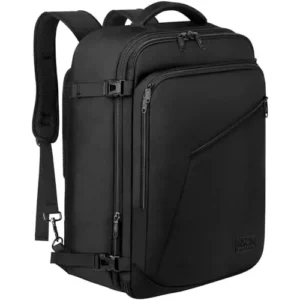
LOVEVOOK 40L Travel Backpack
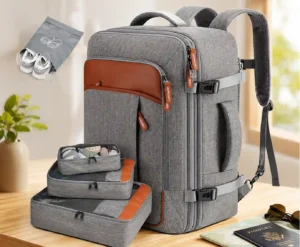
This spacious 40L backpack is the ultimate personal item for air travel, maximizing storage capacity while matching the 18 × 14 × 8-inch dimensions accepted by budget airlines like Spirit and Frontier. It keeps you organized on multi-day trips with built-in compartments, a dedicated wet pocket, and three included packing cubes.
Who Should Buy It
Travelers who want to maximize their under-seat storage limit on budget airlines without paying for a carry-on, while staying highly organized.
Why We Pick It
It offers the perfect balance of maximum personal-item dimensions (18 × 14 × 8 inches) and a massive 40L capacity, complete with dedicated packing cubes and a suitcase-style opening for hassle-free security checks.
Features & Benefits
| Feature | Benefit |
|---|---|
| 18 × 14 × 8" Sizing | Fits under the seat on major and budget airlines, serving as a compliant personal item. |
| 3 Packing Cubes | Includes two storage bags and a shoe bag to keep your clothes and footwear separated and neat. |
| Wet Pocket | Provides a built-in waterproof compartment to isolate damp towels, toiletries, or wet clothes from dry gear. |
| Suitcase-Style Opening | Lays flat like a suitcase for quick packing and easy access at airport TSA checkpoints. |
Pros & Cons
| Pros | Cons |
|---|---|
| ✓ Generous 40L packing capacity | ✕ Fully packed dimensions may feel bulky on very small regional flights |
| ✓ Includes three extra packing accessories | |
| ✓ Water-resistant and tear-resistant fabric | |
| ✓ Padded laptop compartment fits up to 17-inch devices |
The LOVEVOOK 40L is the best overall choice when organization and packing space are top priorities. Its listed 18 × 14 × 8-inch dimensions also make it a natural fit for travelers targeting the common personal-item size benchmark.
The large capacity gives travelers room for clothing, electronics, toiletries, and other trip essentials. At the same time, the included packing cubes make it easier to separate clothing and smaller items.
This backpack is especially useful for short trips where you want to avoid taking a separate carry-on. It also has a 17-inch laptop compartment, which makes it more practical for business and work travel.
There is one important limitation to remember. A 40L capacity does not guarantee personal-item compliance. The backpack can become harder to fit under a seat when heavily packed, so travelers should always check the airline’s rules before departure.
Best Budget: Taygeer Travel Backpack
BEST BUDGET
Taygeer Travel Backpack
Best For: Budget-conscious travelers who want a highly rated travel backpack with practical organization and a shoe pouch.

TAYGEER
Taygeer Travel Backpack for Women
This highly rated budget option offers impressive organization and value, making it a stellar personal item choice for air travelers. Its flight-friendly design easily slides under airplane seats while keeping your essentials neatly sorted.
Who Should Buy It
Travelers looking for a highly budget-friendly personal item bag that does not sacrifice space or organizational compartments.
Why We Pick It
We chose this backpack because it offers an incredible value-to-feature ratio, delivering dedicated laptop space, wet/dry separation, and a lay-flat TSA design at a highly accessible price point.
Features & Benefits
| Feature | Benefit |
|---|---|
| 180-Degree Zipper Closure | Allows the backpack to open flat like a suitcase for quick and easy airport security checks. |
| Wet Pocket & Shoe Bag | Keeps dirty shoes and damp toiletries separate from your clean clothes and tech gear. |
| Built-in Luggage Strap | Lets you slide the pack securely over your rolling suitcase handle for hands-free airport transit. |
Pros & Cons
| Pros | Cons |
|---|---|
| ✓ Excellent budget-friendly value | ✕ Slightly smaller than some maximum-allowable 40L alternatives |
| ✓ Fits under airline seats as a personal item | |
| ✓ Comfortable hybrid carry options as backpack or handbag |
The Taygeer Travel Backpack is the strongest budget pick in this roundup. Its 4.7-star Amazon rating and 29,498 reviews give it a strong customer-feedback record among the selected products.
The backpack also has an Amazon’s Choice badge in the supplied Amazon listing. That makes it particularly interesting for shoppers who want a widely purchased option without spending heavily.
Its travel-focused design includes a shoe pouch and wet pocket. Those features help separate shoes, toiletries, or damp items from the rest of the contents.
The Taygeer also makes sense for travelers who want one bag that can work for flights, weekends, business trips, and everyday use. If price matters most, this is the first product I would compare against the other choices.
Travelers planning longer trips can also compare the overall approach with a backpack designed for long-term travel, especially when capacity and carrying comfort become more important than simply avoiding an airline baggage fee.
Best for Personal-Item Fit: ECOHUB Travel Backpack
BEST FOR AIRLINE PERSONAL-ITEM FIT
ECOHUB Travel Backpack 18×14×8
Best For: Travelers who want a compact backpack designed around common airline personal-item dimensions.

ECOHUB
ECOHUB Travel Backpack (18x13x7.8 in)
Designed specifically to meet strict underseat personal item limits, this 30L backpack helps you avoid unexpected baggage fees on budget airlines like Spirit and Frontier. It packs like a suitcase for simple organization while maintaining a highly compact and lightweight profile.
Who Should Buy It
Flyers who frequently travel on budget airlines with strict underseat limits and want a sustainable, compact bag that maximizes every inch of allowed space.
Why We Pick It
We chose this backpack because its 18 x 13 x 7.8-inch dimensions are perfectly optimized to sit under airline seats, offering a generous 30L capacity without risking extra baggage charges.
Features & Benefits
| Feature | Benefit |
|---|---|
| 18x13x7.8" Dimensions | Fits easily under airline seats and complies with strict personal item rules for budget carriers. |
| 180-Degree Opening | Opens flat like a suitcase to make packing, organizing, and accessing your clothes incredibly simple. |
| Recycled PET Construction | Crafted from 34 recycled plastic bottles, offering an environmentally conscious way to travel. |
Pros & Cons
| Pros | Cons |
|---|---|
| ✓ Sized perfectly for budget airline personal item limits | ✕ Slightly smaller 30L capacity compared to 40L alternatives |
| ✓ Lightweight design at just 1.6 pounds | |
| ✓ Built-in USB charging port for on-the-go power |
The ECOHUB is one of the most useful choices for travelers who care more about dimensions than maximum capacity. Its listed 18 × 13 × 7.8-inch size stays below the common 18 × 14 × 8-inch benchmark in each dimension.
It also provides a 30L capacity, which gives travelers useful packing space without moving into the largest backpack category. The 1.6-pound listed weight is another advantage when every kilogram matters.
The backpack includes 13 pockets, so it can separate electronics, documents, accessories, and everyday travel items. Its water-resistant design also adds useful protection when moving through airports or walking around a destination.
However, travelers should still check their airline’s current rules. Personal-item measurements vary, and packed contents can make a soft backpack larger than its listed dimensions.
Best for Stricter Airline Limits: WANDF Personal Item Travel Bag
BEST FOR STRICTER AIRLINE LIMITS
WANDF Personal Item Travel Bag 17×10×9
Best For: Travelers who want a compact under-seat backpack with dedicated organization and laptop storage.

WANDF
WANDF Personal Item Travel Bag 17x10x9
The WANDF Personal Item Travel Bag is built to meet the stricter sizing rules of airlines like United and Frontier, sliding easily under the seat to help you avoid carry-on fees. With a 180-degree suitcase-style opening and 10 dedicated pockets, it packs like a suitcase while maintaining a compact, flight-friendly footprint.
Who Should Buy It
This backpack is perfect for budget-conscious flyers who frequently travel on airlines with strict personal-item size limits and want a bag that maximizes organization without risking extra baggage fees.
Why We Pick It
We selected this bag because its compact 17x10x9-inch dimensions make it incredibly reliable for fitting under airplane seats, combined with a highly organized 10-pocket layout that mimics larger travel packs.
Features & Benefits
| Feature | Benefit |
|---|---|
| 180° Suitcase Opening | Allows you to pack and unpack quickly and cleanly, making airport security checks stress-free. |
| 10-Pocket Layout | Keeps small travel essentials, accessories, and travel documents perfectly organized and easily accessible on the fly. |
| 15.6" Laptop Compartment | Protects your computer in a dedicated, padded sleeve away from your main luggage items. |
| Luggage Pass-Through Strap | Lets you slide the backpack securely over a rolling suitcase handle for effortless airport transitions. |
Pros & Cons
| Pros | Cons |
|---|---|
| ✓ Fits under-seat dimensions for strict airlines like United and Frontier | ✕ Thick padding and multiple pockets can eat into the main compartment's capacity |
| ✓ 10 pockets offer superior organization | |
| ✓ Easy-access charging port and anti-theft back pocket |
The WANDF is a good choice when a smaller footprint matters more than maximum packing volume. Its listed 17 × 10 × 9-inch dimensions give it a compact profile for personal-item travel.
The design also focuses on organization. Ten pockets help separate smaller items, while the 180-degree opening makes the main compartment easier to access during packing and security checks.
A 15.6-inch laptop compartment makes this backpack useful for students and business travelers. The USB charging port can also be convenient when you need to keep a phone accessible during a long travel day.
The WANDF is especially worth considering when flying with an airline that uses a tighter personal-item allowance. Still, always compare the backpack’s dimensions with the specific airline before traveling.
Best for Travel and Outdoor Use: coowoz Travel Backpack
BEST FOR TRAVEL AND OUTDOOR USE
coowoz Travel Backpack
Best For: Travelers who want one backpack for flights, short trips, hiking, and everyday outdoor use.

COOWOZ
coowoz Travel Backpack (25L)
This versatile 25L pack is designed to transition smoothly from an airplane's under-seat personal item space to outdoor trails and daily activities. Made with water-resistant polyester and featuring specialized organizational compartments, it is an ideal choice for active travelers who want one bag that does it all.
Who Should Buy It
Active travelers who need a compact, personal-item-sized backpack that can seamlessly transition from a flight to outdoor hiking or gym use.
Why We Pick It
We chose this pack because it balances a compact under-seat footprint with rugged, waterproof durability and a unique multi-functional layout, including a dedicated wet bag and shoe compartment.
Features & Benefits
| Feature | Benefit |
|---|---|
| Wet/Dry Separation | Keeps damp clothing or towels isolated from your dry electronics and travel documents during transit. |
| Separate Shoe Compartment | Allows you to pack an extra pair of footwear without dirtying the rest of your travel gear. |
| Dedicated Laptop Storage | Safely fits up to a 15.6-inch laptop and a 13-inch tablet in dedicated, easy-to-access compartments. |
Pros & Cons
| Pros | Cons |
|---|---|
| ✓ Waterproof and durable polyester construction | ✕ Smaller 25L capacity limits storage to 1-2 days of clothing |
| ✓ Breathable padded shoulder straps for carrying comfort | |
| ✓ Highly versatile hybrid design works as a backpack, gym bag, or shoulder bag |
The coowoz stands apart because it is not limited to airport travel. Its 25L capacity and outdoor-oriented design make it useful after the flight as a casual daypack or hiking backpack.
The waterproof polyester construction adds protection for everyday travel. Padded shoulder straps also help make the backpack more suitable for longer periods of carrying.
A separate shoe compartment is useful when your trip includes walking, hiking, or other outdoor activities. The wet-bag design also helps keep damp items away from clean clothing.
Its 4.5-star rating and 14,609 reviews provide strong customer-feedback signals. For travelers who want a versatile backpack rather than a dedicated airport bag, the coowoz is an appealing choice.
Best Compact Option: Sinaliy Travel Backpack
BEST COMPACT OPTION
Sinaliy Travel Backpack for Women
Best For: Travelers who want a smaller personal-item backpack with organized storage and a slim profile.

SINALIY
Sinaliy Travel Backpack for Women, Airline Approved Personal Item
The Sinaliy Travel Backpack is a highly organized, compact 26L personal item designed to easily slide under airplane seats while dodging extra baggage fees. Its 180-degree suitcase opening makes passing through TSA security a breeze, making it an excellent fit for efficient travelers.
Who Should Buy It
Travelers who want a compact, highly organized under-seat bag that easily transitions into a professional briefcase for business trips.
Why We Pick It
We chose this backpack for its strict personal-item compliance on budget airlines like Spirit and JetBlue, paired with smart organizational features like a dedicated wet pocket and tuck-away shoulder straps.
Features & Benefits
| Feature | Benefit |
|---|---|
| 180-Degree Opening | Opens flat like a suitcase so you can pass through airport security quickly without disrupting your packed clothes |
| Convertible 2-in-1 Design | Shoulder straps tuck away completely to transform the backpack into a professional briefcase in seconds |
| Waterproof Wet Pocket | Keeps damp toiletries, towels, or gym gear isolated from your clean clothes and sensitive electronics |
| Built-In Luggage Strap | Slides easily over trolley handles to take the weight off your shoulders during long walks through terminal gates |
Pros & Cons
| Pros | Cons |
|---|---|
| ✓ Fits easily under airline seats | ✕ Smaller 26L capacity compared to 40L alternatives |
| ✓ Tuck-away shoulder straps | |
| ✓ Waterproof wet pocket for toiletries | |
| ✓ Padded sleeve fits 16-inch laptops |
The Sinaliy is the most compact choice in this group by listed dimensions. At 16.9 × 11.8 × 7.87 inches, it leaves more dimensional margin than larger travel backpacks.
That compact design makes it useful for travelers who want to keep their personal item under control. The 26L capacity still provides useful space for clothing, electronics, documents, and flight essentials.
The 180-degree opening makes packing easier and can simplify access during security checks. A wet pocket also gives travelers a practical place for toiletries or damp items.
Its 4.4-star rating and 3,752 reviews make it a solid alternative when a smaller profile matters more than maximum capacity.
What Size Backpack Counts as a Personal Item?
A backpack counts as a personal item when it fits within the airline’s stated personal-item dimensions and can be stored in the required space, usually under the seat. There is no single universal backpack size that works for every airline.
A common benchmark is around 18 × 14 × 8 inches. However, some airlines use smaller limits, so you should check the rules for your specific flight before buying.
This is why physical dimensions matter more than the backpack’s advertised liter capacity. A 40L backpack can be useful for travel, but its packed shape may exceed an airline’s personal-item limit.
Can a 20L Backpack Be a Personal Item?
Yes, a 20L backpack can work as a personal item if its physical dimensions fit the airline’s allowance. Capacity alone does not determine whether a bag qualifies.
A compact 20L backpack can provide enough room for a laptop, headphones, documents, snacks, chargers, and a change of clothes. It can also be easier to slide under a seat than a larger travel backpack.
However, do not assume every 20L backpack has the same dimensions. Two backpacks with identical capacity ratings can have very different shapes.
How to Choose a Backpack as an Airline Personal Item
The best backpack for personal item air travel should satisfy three basic requirements: correct dimensions, useful organization, and comfortable carrying.
1. Check the Airline’s Personal-Item Size
Start with the airline rather than the backpack. Find the exact personal-item dimensions for your ticket and compare them with the backpack’s measurements.
This step is especially important for budget airlines. A backpack that fits one airline’s allowance may not fit another carrier’s sizer.
2. Compare Dimensions Before Liters
Capacity tells you how much a manufacturer believes the backpack can hold. Dimensions tell you how much physical space the backpack occupies.
For air travel, dimensions usually matter more. Therefore, compare height, width, and depth before comparing 20L, 25L, 30L, or 40L labels.
3. Think About How You Pack
A backpack with many compartments can make a short trip easier to organize. However, more pockets do not always mean more useful space.
If you pack clothing in cubes, prioritize a large main compartment. If you carry electronics, prioritize padded laptop and accessory compartments.
4. Consider Your Laptop
Business travelers should check the laptop compartment size before buying. A backpack may have plenty of overall capacity but still lack the right laptop sleeve.
A dedicated compartment can also keep a laptop separate from clothing and other items.
5. Check the Backpack’s Weight
A heavy backpack reduces the amount of useful weight you can carry. This matters even more when an airline has weight restrictions.
Lightweight designs are attractive for minimalist travel. However, extremely light construction may provide less structure or padding.
6. Look at the Shoulder Straps
Personal items are often carried farther than expected. You may walk through terminals, transfer between trains, or explore a destination after landing.
Padded shoulder straps and a supportive back panel can make a noticeable difference. Comfort becomes even more important when the backpack is fully packed.
7. Consider Organization
Good organization lets you reach passports, chargers, headphones, snacks, and other essentials without unpacking the entire bag.
Useful features include exterior pockets, laptop compartments, wet pockets, bottle pockets, and separate shoe storage.
8. Think About Water Resistance
Water-resistant materials can protect clothing and electronics during light rain or wet airport transfers. They do not necessarily make a backpack waterproof.
If you carry expensive electronics, consider using separate protective sleeves or waterproof pouches as another layer of protection.
How to Pack a Backpack for Air Travel
Pack the heaviest items close to your back and keep frequently needed items near the top or in exterior pockets. This makes the backpack easier to carry and easier to access.
- Place heavier electronics close to the back panel.
- Put clothing in packing cubes when possible.
- Keep travel documents in an easy-access pocket.
- Place headphones and chargers where you can reach them quickly.
- Keep liquids together in an accessible toiletry bag.
- Use shoe compartments or separate bags for footwear.
- Leave some flexibility in the main compartment.
- Check the backpack’s packed dimensions before leaving home.
Do not pack the backpack until it becomes rigid and oversized. A soft backpack can sometimes compress into an under-seat space, but overpacking can remove that advantage.
For electronics, it can also help to prepare your charging gear before the trip. A guide on choosing a portable power bank can help when you need extra battery capacity without adding unnecessary weight.
Can I Bring a Backpack on a Plane as a Personal Item?
Yes, a backpack can be a personal item on a plane when the backpack meets the airline’s size requirements. Small backpacks are among the most practical personal-item choices because they keep your hands free.
However, the airline’s rules still apply. A backpack marketed as an airline personal item is not automatically accepted by every airline.
Before traveling, check the current allowance for your airline and ticket type. Then compare that measurement with the backpack’s packed dimensions.
Is a Backpack Better Than a Personal-Item Duffel?
A backpack is usually better when you want hands-free carrying and better weight distribution. A duffel can be useful when quick access and flexible packing matter more.
Backpacks are particularly useful when you need to walk long distances through an airport. They also transition more easily into an everyday daypack after landing.
A duffel may provide a wider opening and easier access to clothing. However, carrying a heavy duffel by one handle can become uncomfortable during long connections.
What Should You Look for in a Comfortable Travel Backpack?
Look for padded shoulder straps, a supportive back panel, a manageable weight, and a shape that stays comfortable when loaded.
Capacity should also match your normal packing habits. A huge backpack can encourage overpacking, which makes any design less comfortable.
For longer journeys, consider how the backpack feels after several hours. The best personal item backpack is not useful if the bag becomes uncomfortable before you reach your gate.
Personal Item vs Carry-On: What Is the Difference?
A personal item normally goes under the seat, while a standard carry-on is generally designed for the overhead compartment.
This difference affects the size of backpack you should choose. A personal-item backpack needs to remain compact enough for the under-seat area.
If you want to travel with only a personal item, organization becomes more important. You need to make better use of every available space without exceeding the airline’s dimensions.
When Should You Choose a Larger Travel Backpack?
A larger backpack makes sense when you need more clothing, shoes, electronics, or other gear. However, a larger backpack may no longer qualify as a free personal item.
For longer trips, compare the requirements with a long-term travel backpack before deciding that a personal-item-only setup is enough.
If international flights are part of your plans, it is also useful to review travel backpack options for international trips, because different airlines can impose different size restrictions.
How to Avoid Choosing a Backpack That Is Too Large
The easiest way to avoid an oversized personal item is to start with the airline’s measurements.
- Check the airline’s current personal-item dimensions.
- Measure the backpack’s height, width, and depth.
- Consider how much the backpack expands when packed.
- Compare the packed shape with the airline’s sizer dimensions.
- Avoid filling every compartment before traveling.
Do not rely only on statements such as “airline approved.” Those descriptions can refer to a carry-on allowance rather than the smaller personal-item allowance.
Why Capacity Can Be Misleading
A 40L backpack sounds much larger than a 25L model. Yet the difference in practical airline use can be less obvious when the larger backpack must stay compressed.
For example, the LOVEVOOK provides a large amount of packing space. However, its usefulness as a personal item depends on keeping the packed shape within the airline’s limits.
Meanwhile, a smaller backpack can sometimes be easier to manage under a seat. The ECOHUB, WANDF, and Sinaliy choices are useful examples of this approach.
Best Personal Item Backpack for Different Travelers
For Maximum Organization
Choose the LOVEVOOK 40L if you want multiple compartments and included packing cubes. It is the most feature-rich option in this selection.
For the Lowest Price
Choose the Taygeer if budget is the main concern. Its strong Amazon rating and large review count also make it an appealing value choice.
For Airline-Focused Packing
Choose the ECOHUB if you want a backpack designed around a compact 18 × 13 × 7.8-inch profile. It offers a useful balance between space and dimensions.
For a Compact Profile
Choose the WANDF or Sinaliy when you prefer a smaller backpack. Both options focus on keeping the physical footprint manageable.
For Outdoor Trips
Choose the coowoz if the backpack will also serve as a daypack for hiking and outdoor activities.
What to Pack in a Personal Bag for Flying
A personal item should hold the things you may need during the flight rather than every item you own.
- Passport and travel documents
- Phone and charging cable
- Power bank
- Headphones
- Laptop or tablet
- Wallet and keys
- Prescription or essential personal items
- Small toiletry bag
- Snacks
- Water bottle when permitted and empty for security screening
- Light jacket or travel layer
- Small change of clothes for longer journeys
Keep the items you will use during the flight in the easiest-to-reach compartment. This reduces the need to open the entire backpack at your seat.
Should You Choose a Backpack With a USB Charging Port?
A USB charging port can be convenient, but it should not be the main reason to choose a personal-item backpack.
The port usually connects to a power bank inside the backpack. You still need to carry the power bank itself and follow the airline’s rules for lithium batteries.
For most travelers, correct dimensions, comfort, organization, and durability should come first. Charging features are secondary conveniences.
How to Choose Between a 40L and 25L Backpack
Choose 40L when you prioritize packing capacity, and choose around 25L when you prioritize a more compact everyday carry.
A 40L design can be useful for clothing-heavy trips. However, it can also encourage overpacking and become difficult to fit under a seat when full.
A 25L backpack gives you less room but can be easier to control. It may also transition more naturally from airport use to sightseeing.
What Other Features Matter for Air Travel?
Luggage Sleeve
A luggage sleeve lets you attach the backpack to the handle of a rolling suitcase. This is useful when the backpack is your personal item and another bag is your carry-on.
Wet Pocket
A wet pocket separates damp clothing or toiletries from dry items. This is particularly useful on longer trips.
Shoe Compartment
A separate shoe area prevents footwear from touching clean clothes. It also helps travelers organize bulky items.
Clamshell or 180-Degree Opening
A wide opening makes packing easier. It can also help you access items without digging through a deep top-loading compartment.
Water-Resistant Material
Water-resistant fabric can protect contents from light rain. It is useful for airport transfers and daily sightseeing.
How We Selected These Personal Item Backpacks
The selection focuses on the actual search intent behind best backpack for air travel personal item. The goal is not to choose the biggest or most expensive backpacks.
Instead, the lineup covers different travel priorities. Those priorities include capacity, airline-friendly dimensions, price, organization, compactness, and outdoor versatility.
We also prioritized products with strong customer-rating signals from the supplied Amazon listings. That helps reduce the risk of choosing a product with a weak customer response simply because it has an attractive specification list.
Product ratings are useful signals, but they should not replace checking dimensions and airline rules. A highly rated backpack can still be the wrong choice for a specific flight.
Frequently Asked Questions
Can I use a backpack as my personal item?
Yes. A backpack can be a personal item when it fits your airline’s required dimensions and under-seat storage rules.
What is the best backpack for air travel personal item use?
The LOVEVOOK 40L Travel Backpack is our Best Overall choice. The Taygeer is better for budget shoppers, while ECOHUB and WANDF are better for travelers focused on compact dimensions.
Is a 40L backpack too big for a personal item?
Not necessarily, but capacity alone does not determine compliance. The backpack’s physical dimensions and packed shape must fit your airline’s personal-item allowance.
Is 25L enough for a personal item?
For many travelers, 25L can provide enough space for flight essentials and a short trip. The actual dimensions still matter more than the capacity number.
What is the safest size to choose for a personal item?
There is no universal safest size. The best approach is to compare the backpack with the exact dimensions published by your airline.
Should I buy a backpack with packing cubes?
Packing cubes can make a travel backpack easier to organize. They are particularly useful when you want to separate clothing, shoes, and small accessories.
Is a personal-item backpack better than a carry-on backpack?
It depends on your travel style. A personal-item backpack is better when you want to avoid using overhead space, while a larger carry-on backpack provides more packing room.
Can a personal-item backpack replace a carry-on?
It can for minimalist trips. However, the answer depends on how much clothing, technology, and other gear you need to carry.
What should I measure before buying?
Measure the backpack’s height, width, and depth. Also consider how those measurements change when the backpack is fully packed.
Final Buying Checklist
Before purchasing a backpack for air travel, run through this quick checklist:
- Airline dimensions: Does the packed backpack fit your airline’s personal-item limit?
- Capacity: Is there enough room for your normal packing list?
- Weight: Is the backpack light enough for comfortable carrying?
- Laptop storage: Does the compartment fit your device?
- Organization: Can you separate documents, electronics, clothing, and toiletries?
- Comfort: Are the shoulder straps and back panel suitable for long walks?
- Durability: Can the materials handle frequent travel?
- Weather protection: Does the backpack offer suitable water resistance?
- Versatility: Will you use it after the flight?
- Value: Are the features worth the price for your travel style?
Final Thought
The best backpack for air travel personal item use should fit your airline first and your packing style second. Do not choose based only on liters or a claim that a backpack is airline approved.
For most travelers, the LOVEVOOK 40L offers the best combination of organization and useful capacity. However, the Taygeer is the better budget choice, while ECOHUB and WANDF make more sense when compact dimensions are the priority.
- Best Overall: LOVEVOOK 40L Travel Backpack | View Now at Amazon
- Best Budget: Taygeer Travel Backpack | View Now at Amazon
- Best for Personal-Item Fit: ECOHUB Travel Backpack | View Now at Amazon
- Best for Stricter Dimensions: WANDF Personal Item Travel Bag | View Now at Amazon
- Best for Travel and Outdoor Use: coowoz Travel Backpack | View Now at Amazon
- Best Compact Option: Sinaliy Travel Backpack | View Now at Amazon
Before you buy: Measure the backpack, check your airline’s current personal-item rules, and consider how the bag will fit when fully packed.
Useful Travel Resources
For more travel planning, compare the best travel backpack options for international travel and consider how your packing needs change on longer trips with a long-term travel backpack.
If electronics are part of your personal item, learning how to choose a portable power bank can help you select charging gear that matches your travel needs.
For additional airline and baggage guidance, check the U.S. Department of Transportation’s Air Consumer information.